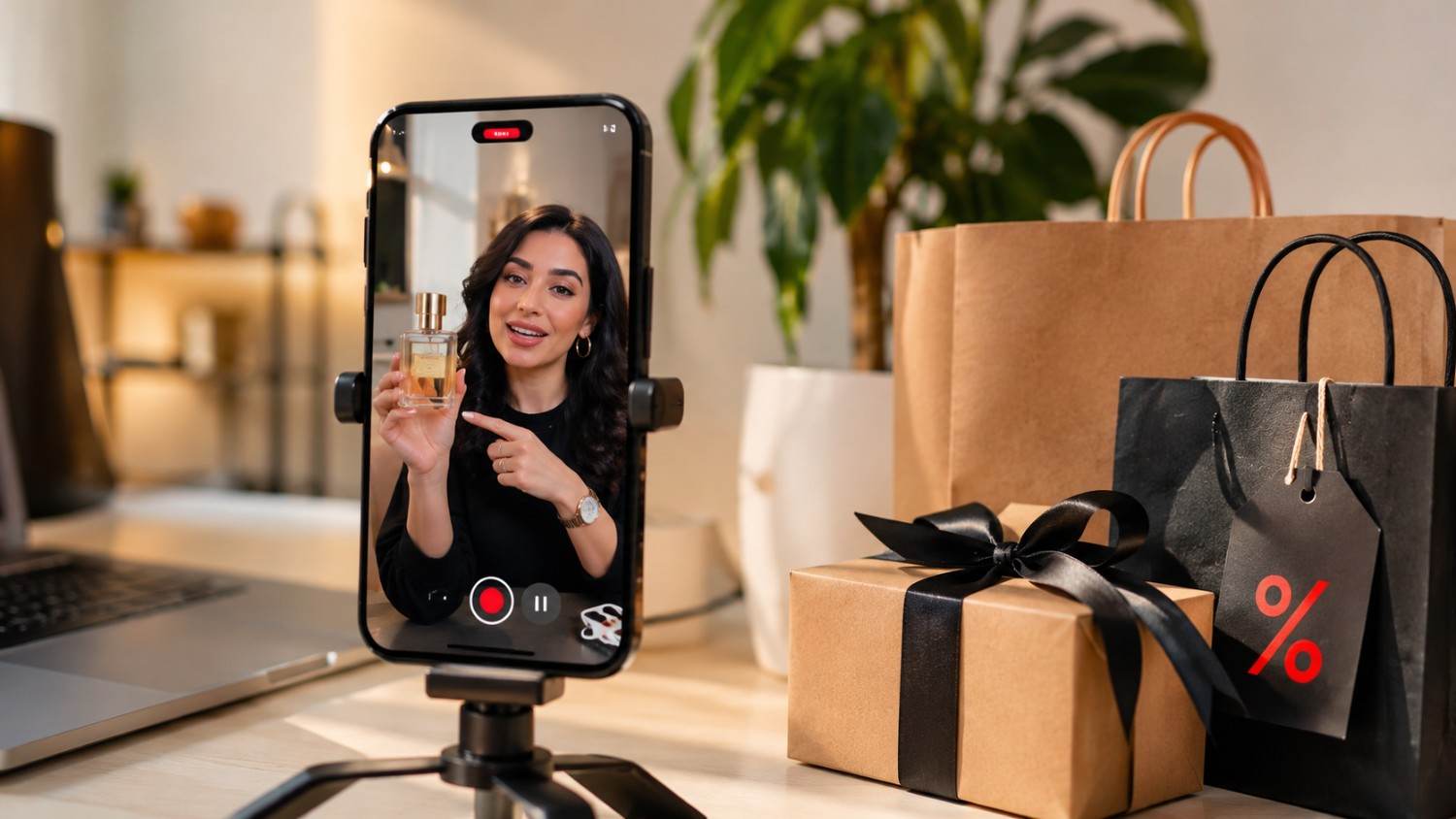
Ask three Saudi influencers for a campaign quote and you may receive three very different numbers.
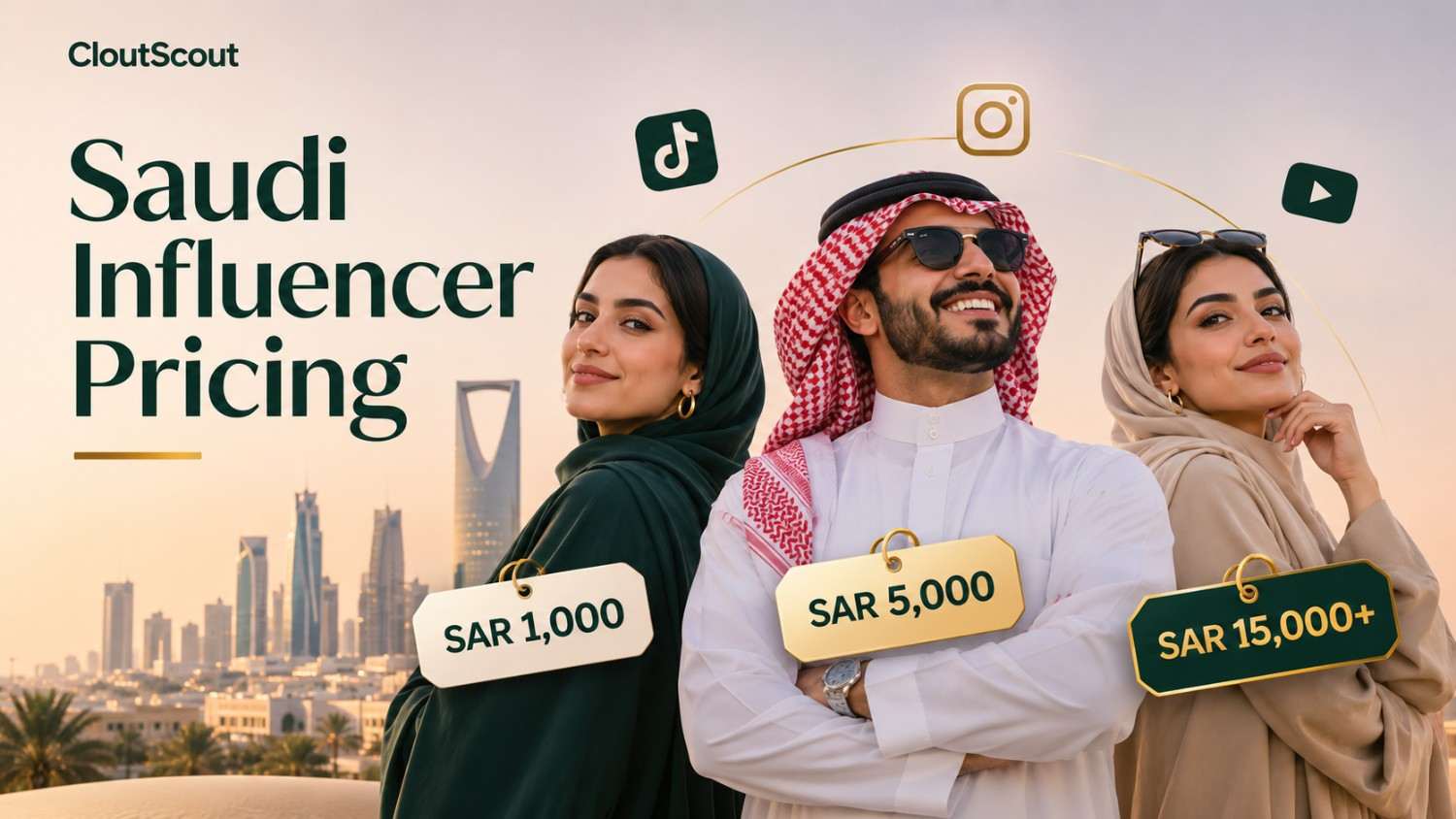
One creator might ask for SAR 1,000. Another may quote SAR 5,000. A third could ask for SAR 15,000 or significantly more.
Their follower counts may not even be dramatically different.
That is because influencer pricing in Saudi Arabia is not determined by audience size alone. The final price can reflect the creator, platform, deliverables, production effort, usage rights, exclusivity, campaign timing, and other commercial terms.
For brands, the useful question is therefore not:
“How much should an influencer with 100,000 followers cost?”
It is:
“What are we paying for, and does the creator provide enough value to justify that cost?”
Saudi influencer pricing is not a rate card; it is a commercial package.
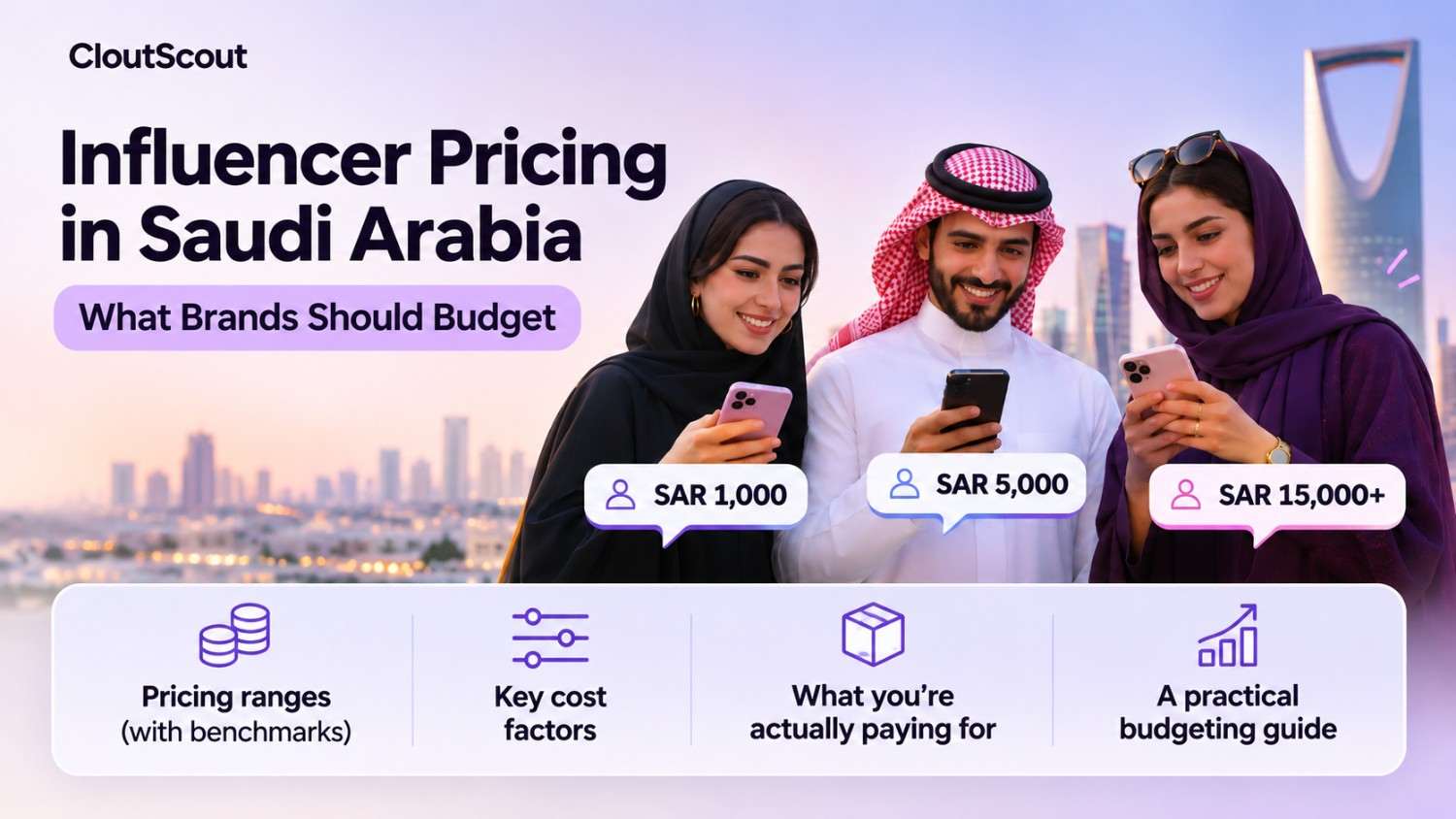
How Much Do Influencers Charge in Saudi Arabia?
There is no official Saudi influencer rate card.
Public benchmarks can help with planning, but the ranges vary significantly depending on how the data is collected. Recent Trendly data based on more than 6,000 creator offers provides a useful example.
For one paid TikTok video, creators with 10,000 to 100,000 followers had a median first offer of SAR 600, with half of offers between SAR 500 and SAR 1,000. Creators with 100,000 to 500,000 followers had a median first offer of SAR 800, with half between SAR 500 and SAR 1,500.
That is much lower than some broader published benchmark guides.
StarNgage's 2026 Saudi benchmarks, for example, estimate general per-post ranges of SAR 750–3,000 for nano creators, SAR 3,000–15,000 for micro creators, SAR 15,000–75,000 for macro creators, and SAR 75,000–300,000+ for mega creators.
These figures are planning references, not fixed rates.
Trendly reflects creator offers from its own campaign marketplace, while broader benchmarks may represent different creators, campaign scopes, platforms, and commercial packages.
Follower Count Is Only One Pricing Factor
The Saudi data also shows why brands should be careful with follower-based pricing.
On Trendly, the median first offer for creators with 100,000–500,000 followers was only SAR 200 higher than the median for those with 10,000–100,000 followers. Variation within each follower band was much larger.
Two creators with similar audiences can charge very differently because of:
- Saudi audience percentage
- Engagement quality
- Creator niche
- Content quality
- Platform
- Brand demand
- Production requirements
- Previous campaign experience
This is especially important for regional campaigns.
Brands operating across multiple GCC markets should account for the differences between influencer marketing in Saudi Arabia and the UAE instead of applying the same creator assumptions to both.
Two creators with the same follower count can have very different commercial value.
Platform and Content Format Affect the Price
A Story, TikTok video, YouTube review, and multi-platform package require different amounts of work. Long-form YouTube integrations may require product testing, scripting, filming, and editing.
A TikTok may be shorter but still require several concepts, revisions, or location shoots. Instagram campaigns may combine Reels, Stories, feed content, and additional deliverables.
The pricing question should therefore be: What content is the creator actually producing?
Not simply:
Which platform are they posting on?
Multi-platform campaigns can also increase pricing because the creator is producing additional assets and giving the brand access to more than one audience.
Creator Niche Can Move Rates Significantly
Category also matters.
Published Saudi benchmarks show higher ranges in areas such as beauty, fashion, tech, and gaming.
For example, StarNgage estimates 2026 micro-influencer ranges of SAR 4,000–18,000 for beauty, SAR 4,500–20,000 for tech and gaming, and SAR 4,000–18,000 for fashion and luxury.
Why?
Some niches have stronger advertiser competition. Others require more production work. Some have fewer credible specialised creators available.
Automotive content, for example, may require travel, vehicle access, and more complex filming. Tech reviews may require days of product testing.
Beauty creators in high demand may have multiple competing partnership opportunities. Creator niche can change the price as much as creator size.
What Are Brands Actually Paying For?
A creator quote should be viewed as a package of commercial components.
This is why two SAR 5,000 quotes may not be comparable. One might cover only a published Reel.
Another could include additional Stories, paid usage, or several months of licensing. Always compare scope before comparing price.
Usage Rights and Exclusivity Can Increase the Cost
Usage rights create additional value for the brand. A creator might publish one Reel organically.
But the brand may also want to use it in:
- Paid social
- Ecommerce pages
- Brand social channels
- Retargeting
Those uses should be agreed upfront.
If paid amplification or broader reuse is planned, the quote should clearly define influencer content usage rights.
Exclusivity is different.
It restricts which competing brands the creator can work with.
The broader and longer that restriction becomes, the more commercial opportunities the creator may be giving up, which can increase compensation. CloutScout's guide to influencer exclusivity clauses explains how scope, market, platform, and duration affect that agreement.
What Should a Saudi Influencer Budget Include?
The creator fee is not necessarily the full campaign cost.
Brands may also need to budget for:
- Creator fees
- Products or gifting
- Shipping
- Travel
- Production
- Usage rights
- Exclusivity
- Paid amplification
- Tracking
- Agency or platform costs
- Contingency
- VAT where applicable
Saudi Arabia's standard VAT rate is 15% for taxable supplies, so brands should confirm whether relevant supplier or creator quotes include VAT rather than assuming the headline figure is the final cost.
A simple campaign budget might therefore look like:
Creator Costs + Rights + Production + Paid Media + Campaign Operations
The exact split should follow the campaign objective.
How Can Brands Avoid Overpaying?
Avoiding overpayment does not mean negotiating every creator down to the lowest possible rate. It means understanding what the creator is worth to the campaign.
Before accepting a quote, check:
A creator who costs more but reaches the right Saudi customer may represent better value than a cheaper creator whose audience is poorly aligned. The cheapest creator is not automatically the best value, and the most expensive creator is not automatically the strongest investment.
Frequently Asked Questions About Influencer Pricing in Saudi Arabia
How Much Do Influencers Charge in Saudi Arabia?
Saudi influencer pricing can range from hundreds of riyals for some smaller creator activations to tens or hundreds of thousands of riyals for larger partnerships, depending on the creator and campaign scope.
How Much Does a Micro Influencer Cost in Saudi Arabia?
Micro-influencer rates vary widely, with recent marketplace data showing much lower asking prices than some broader published market benchmarks, so brands should treat public ranges as directional rather than fixed.
What Affects Saudi Influencer Pricing?
Saudi influencer pricing depends on audience relevance, creator niche, platform, deliverables, production requirements, usage rights, exclusivity, timing, and creator demand.
Do Influencers Charge Extra for Usage Rights?
Creators may charge additional fees when brands want to reuse their content through paid advertising, ecommerce, social media, or other marketing channels.
Are Bigger Influencers Always More Expensive?
No, creators within the same follower range can quote very different rates because follower count is only one factor in the commercial value of a partnership.
Should Brands Negotiate Influencer Rates?
Brands can negotiate influencer rates, but the priority should be clarifying deliverables, rights, restrictions, and expected value rather than simply reducing the headline fee.
Budget for the Partnership, Not Just the Post
Influencer pricing in Saudi Arabia becomes easier to understand once brands stop looking for one universal rate. A creator's follower count matters. But so do their audience, category, platform, content, production requirements, usage rights, exclusivity, and campaign role.
That means the real budgeting framework is:
Creator Value → Deliverables → Rights → Restrictions → Production → Performance → Total Cost
CloutScout helps brands evaluate creator audiences and campaign fit before moving into commercial negotiations, making it easier to compare creators on more than follower count alone.
Saudi influencer pricing is not a rate card; it is the total commercial value of the partnership the brand is buying.
Add a practical tiered budget tableClarify conflicting benchmark comparisons