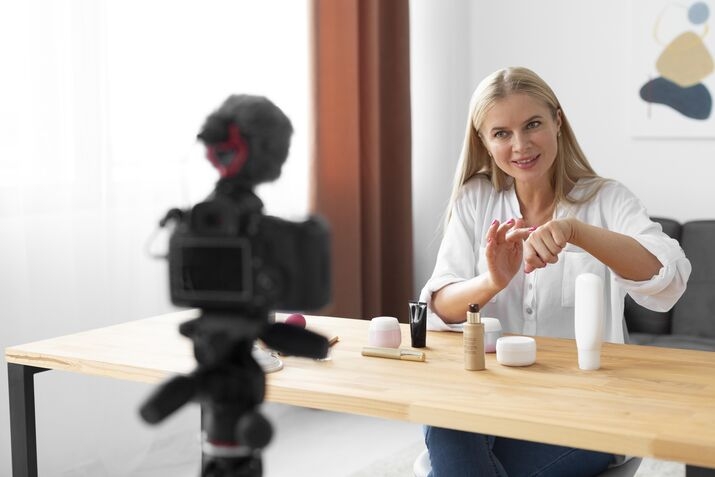
Instagram influencer marketing helps brands reach specific audiences through creator-led content that can build awareness, support product discovery and drive measurable actions.
In 2026, follower count alone is no longer enough to choose the right creator.
Brands should evaluate audience relevance, content quality, engagement authenticity, creator credibility and recent performance before committing budget.
Instagram offers several formats, including Reels, Stories, posts, reviews and UGC, giving brands different ways to reach customers across the buying journey.
The key is matching the right creator with the right audience and campaign objective.
CloutScout helps brands discover, analyse and compare Instagram creators using audience and performance insights.
What Is Instagram Influencer Marketing?
Instagram influencer marketing is when brands partner with Instagram creators to promote products, services or experiences to relevant audiences.
Campaigns can include sponsored posts, Reels, Stories, product demonstrations, reviews, affiliate partnerships and user-generated content.
Today, brands use creator partnerships for more than awareness. They can support product discovery, trust building, content creation, paid advertising and measurable customer actions.
This also changes how brands should evaluate creators.
A large audience can provide reach, but it does not automatically mean the audience is relevant or engaged.
The strongest partnerships come from creators whose audience, content style and credibility match the brand's campaign objective.
That makes the audience and campaign fit more important than popularity alone.
Why Does Instagram Influencer Marketing Still Matter in 2026?
Instagram influencer marketing remains valuable because it combines creator trust, visual content and targeted audience reach.
Creators can introduce products through routines, tutorials, reviews and recommendations, helping brands reach people who already follow content around specific interests.
Influencer partnerships can also create reusable content for social media, product pages, websites and paid campaigns when usage rights allow.
Instagram's different formats, including Reels, Stories and posts, give brands flexibility across different campaign goals.
The key is not maximum reach.
It is reaching the right people with content that fits how they discover and evaluate products.
For UAE and GCC campaigns, brands should also look beyond the creator's location and understand where their audience actually lives.
What Instagram Influencer Marketing Trends Are Shaping 2026?
Several trends are changing how brands discover, evaluate and work with Instagram creators in 2026.
Brands Are Moving Beyond Follower Count
Follower count shows potential reach, but it does not confirm audience quality or campaign fit.
Brands are increasingly looking at audience relevance, engagement quality, content performance and conversion potential before choosing creators.
The key question is no longer, “How many followers do they have?”
It is, 'Can this creator influence the right audience for our goal?' If you're rethinking how you weigh this, our guide on followers count vs. real influence breaks down what to look at instead.”
Micro and Niche Creators Are Gaining Attention
Micro and niche creators can give brands access to more focused communities.
They may be particularly useful for specialised products, local campaigns and categories where trust matters.
However, smaller creators do not automatically deliver better results - a trade-off explored further in our comparison of famous Instagram influencers vs. micro influencers.
Short-Form Video Remains Important
Instagram Reels give creators a flexible format for demonstrating, comparing and explaining products.
Brands looking for Instagram Reels influencers should review more than one viral video.
Recent views, consistency and engagement can provide a better picture of ongoing performance - see our breakdown of what Instagram Reel views actually tell brands.
Creator Partnerships Are Becoming More Long-Term
Brands are increasingly looking beyond one-off sponsored posts.
Longer-term partnerships can build familiarity, generate more content and give brands more performance data over time.
This can also help teams identify which creators and content formats deserve further investment.
AI Is Changing Creator Discovery
AI can help brands search for creators, analyse audiences, compare profiles and build shortlists more efficiently.
However, technology should support-not replace-human judgement.
Brands still need to evaluate creative fit, audience relevance, brand positioning and campaign goals.
What Types of Instagram Influencers Can Brands Work With?
The right Instagram creator type depends on the campaign objective, target audience and required reach.
Follower categories can help organise creator searches, but audience relevance should remain the main selection factor.
Nano Influencers
Nano influencers can suit local campaigns, community engagement and product seeding.
Their smaller audiences can be valuable when brands prioritise close audience relationships and relevance over scale.
Micro Influencers
Micro influencers can work well for niche audiences, product education and recommendation-led campaigns.
They can help brands reach focused communities without relying on celebrity-level visibility.
Mid-Tier Influencers
Mid-tier influencers can balance audience reach with established content quality.
They may suit product launches and campaigns that need broader visibility while maintaining a clear niche.
Macro Influencers
Macro influencers can support campaigns where large-scale awareness and reach are priorities.
However, brands should still check audience relevance before investing in their larger reach.
UGC Creators
UGC creators are often hired for content production rather than audience distribution.
Their videos can support product demonstrations, creative testing, social content and paid advertising.
A UGC creator and an influencer can therefore solve different campaign needs.
How Do You Choose the Right Instagram Influencers?
Choosing Instagram influencers based mainly on popularity is one of the easiest ways to waste campaign budget.
A stronger selection process evaluates five areas.
Audience Demographics
Review audience location, age, gender, interests and language.
For UAE and GCC campaigns, separate creator location from audience location.
A Dubai-based creator may still have most followers outside the target market.
Content Relevance
Review recent posts, recurring themes, product categories and storytelling style.
The creator should have a natural reason to talk about your product.
Natural relevance makes the partnership easier for both the creator and their audience.
Engagement Quality
Do not treat engagement rate as the final answer.
Review comments, shares, saves and other available engagement signals.
Strong numbers do not necessarily mean the audience is commercially relevant - an engagement rate calculator can help verify what's behind them.
Previous Brand Partnerships
Check competitor collaborations, sponsored content frequency and overall brand compatibility.
Frequent unrelated promotions can weaken creator credibility and campaign fit.
Performance Data
Review average views, content consistency, audience response and previous performance.
Do not shortlist a creator because of one exceptional post.
Look for consistent patterns across recent content.
An influencer analytics platform such as CloutScout can help brands compare these signals and build more focused creator shortlists.
Which Instagram Influencer Campaign Strategies Work Best?
The strongest Instagram influencer campaigns match the content format to the business objective.
The content should feel natural to the creator's usual style. Overly scripted promotions can reduce the authenticity that makes creator partnerships effective.
Before publishing, brands should agree on deliverables, approvals, disclosure requirements and content usage rights.
Instagram also requires qualifying branded content to use the appropriate paid partnership disclosure. Eligible creator content can be amplified through Meta's Partnership Ads when the necessary permissions are provided.
A strong creator asset can therefore continue delivering value beyond the original post.
How Do Brands Measure Instagram Influencer Marketing Success?
Instagram influencer marketing success should be measured against the campaign's original objective.
Views and likes are useful signals, but they should not automatically be treated as business results.
For performance campaigns, tracking links, promo codes and conversion data can connect creator activity with measurable outcomes.
For awareness campaigns, reach, impressions and views may matter more.
For content-led campaigns, brands can also measure the value of reusable creator assets based on agreed usage rights.
Set tracking before the campaign launches so performance can be measured from the start.
What Are the Most Common Instagram Influencer Marketing Mistakes?
Most Instagram influencer marketing mistakes happen when brands confuse visible popularity with campaign value.
- Choosing creators mainly by follower count: A large audience does not guarantee relevance or strong campaign results, which is why 100K followers alone isn't proof a brand can trust an influencer. Scale without the right audience can waste budget.
- Ignoring audience location: A creator may have a large following but limited reach in the target market. This is particularly important for UAE and GCC campaigns.
- Treating every creator the same: Different campaign objectives require different audiences, content formats and creator strengths.
- Relying only on vanity metrics: Likes and views provide useful context, but they should be connected to the broader campaign objective.
- Treating every partnership as a one-off: Campaign results should inform future creator shortlists, creative decisions and budget allocation.
Strong influencer marketing should become a learning system, not a sequence of disconnected posts.
How Does CloutScout Help With Instagram Influencer Marketing?
CloutScout helps brands find and evaluate Instagram creators based on audience fit rather than follower count alone.
Manual creator research can require teams to search profiles individually, compare audiences and review performance across different sources.
CloutScout makes this process more structured by bringing creator discovery and audience insights into one workflow.
The platform currently provides access to 252M+ creator profiles across Instagram, TikTok and YouTube, with 20+ advanced filters.
Brands can use audience insights, audience overlap, follower credibility, Reels data and competitor information to narrow their options.
A practical workflow is simple:
- Define the campaign objective.
- Search for relevant Instagram creators.
- Apply audience, niche and location filters.
- Review content and audience fit.
- Compare performance signals.
- Build a focused shortlist.
This helps teams move from a large creator pool to more relevant partnership options. If you'd rather hand the whole process to a team, our influencer marketing services guide explains what that looks like.
Discover Instagram influencers that match your audience and campaign goals with CloutScout.
Instagram Influencer Marketing Checklist
Before launching an Instagram influencer campaign, confirm:
- Audience fit: The creator reaches the target audience.
- Content fit: Their content naturally aligns with the brand.
- Engagement quality: Engagement appears genuine and relevant.
- Audience geography: Their audience matches the campaign market.
- Previous partnerships: Past collaborations do not create conflicts.
- Deliverables: Content requirements and deadlines are clearly defined.
- Usage rights: Content usage and paid amplification rights are agreed.
- Disclosure: Required sponsorship disclosures are understood.
- Tracking: Links, promo codes or other tracking methods are ready.
- Success metrics: KPIs match the campaign objective.
Frequently Asked Questions
What Is Instagram Influencer Marketing?
Instagram influencer marketing is when brands partner with creators to promote products, services or experiences through Instagram content.
Why Is Instagram Useful for Influencer Marketing?
Instagram offers formats such as Reels, Stories and posts, allowing creators to demonstrate products, share experiences and reach relevant audiences.
Are Instagram Influencers Effective in 2026?
Yes, when creators are selected based on audience relevance, content quality, credibility and campaign objectives.
Follower count alone does not determine campaign effectiveness.
How Do Brands Find Instagram Influencers?
Brands can search manually or use an influencer discovery platform such as CloutScout.
These tools can help teams search, analyse, compare and shortlist creators using audience and performance data.
What Metrics Should Brands Track?
Choose metrics based on the campaign goal.
These may include reach, impressions, views, engagement, clicks, conversions, revenue and content value.
Should Brands Work With Micro Influencers?
Yes, when micro influencers have the right audience, content fit and credible engagement.
Creator selection should be based on campaign goals, not audience size alone.
Build Instagram Creator Partnerships Around Fit, Not Fame
The strongest Instagram influencer marketing strategies in 2026 start with audience and campaign fit, not follower count.
Brands should evaluate creator relevance, content quality, credibility and performance before committing a budget.
CloutScout helps teams discover and compare Instagram creators using audience and performance insights.
Find the right creators, build focused shortlists and turn influencer discovery into better campaign decisions.
.jpg)